
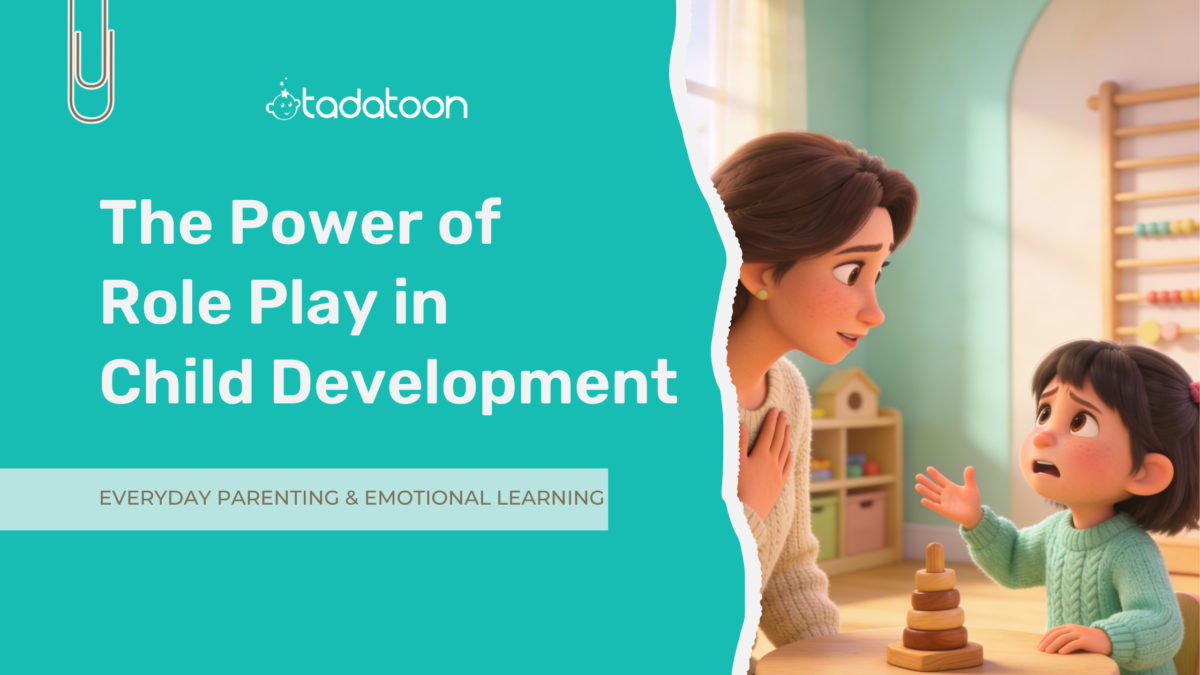
How simple everyday moments can build emotional intelligence, confidence, and connection
Introduction
What if the moments that challenge us most as parents…
were actually the best opportunities for learning?
From grabbing toys to big emotional reactions, children face complex social and emotional situations every day. But instead of correcting behavior in the moment, research suggests something more effective:
👉 Practice before correction.One of the most powerful tools to support this is role play.
What is Role Play? (And Why It Matters)
Role play is a form of play-based learning where children act out real-life situations in a safe and guided way.
According to developmental psychology and educational research:
- Children learn best through active experience, not passive instruction
- Pretend play supports symbolic thinking and problem-solving
- Social scenarios help build empathy and perspective-taking
Researchers like Lev Vygotsky emphasized that learning happens in interaction — and role play creates exactly that space.
The Science Behind Role Play
Studies in social-emotional learning (SEL) show that role play helps children:
✔ Develop emotional regulation
✔ Practice language for real situations
✔ Build confidence in social interactions
✔ Reduce impulsive reactions
When children rehearse a situation through play, their brain builds neural pathways that make real-life responses easier and more natural.
In simple terms:👉 Children don’t just hear what to do —
they experience how to do it.
🎭 Everyday Role Plays That Make a Difference
At Tadatoon, we focus on real-life parenting moments — the ones that happen every day.
Here are a few simple examples:
🧸 Sharing
Situation: One toy, two children
Practice: Taking turns
What children learn: patience, fairness, communication
🎥 Watch this role play in action on our YouTube channel
😠 Big Emotions
Situation: Something feels unfair
Practice: Pause + name the feeling
What children learn: emotional awareness and regulation
🎥 Watch the video here
💭 Making Mistakes
Situation: Something went wrong
Practice: Try again
What children learn: resilience and growth mindset
🎥 Watch the video here
🧹 Tidying Up
Situation: Toys are everywhere
Practice: Start together
What children learn: responsibility and initiation
🎥 Watch the video here
🌟 Why Role Play Works (When Correction Doesn’t)
In real-life situations, children are often overwhelmed by emotions.
This makes it hard for them to process instructions.
But role play happens in a safe, calm moment.
That means:
- The brain is more open to learning
- The child feels seen, not judged
- The focus shifts from “being right” to “trying together”
👨👩👧 How Parents Can Start
You don’t need anything complicated.
Start with:
- A simple real-life situation
- A short role play (1–2 minutes)
- A calm, playful tone
You can even switch roles and let your child be the parent —
this often leads to powerful insights.
✨ The Tadatoon Approach
At Tadatoon, we combine:
🎭 Role Play
📖 Storytelling
💛 Emotional Learning
Because we believe:Children don’t learn from being told.
They learn from experiencing.
📌 Final Thought
The next time your child struggles with a moment…
Pause.
And ask yourself:
👉 Can we practice this instead of fixing it?
🎭 Explore More
We’ve created a series of short videos to help you practice these role plays at home.
👉 Watch on YouTube: