
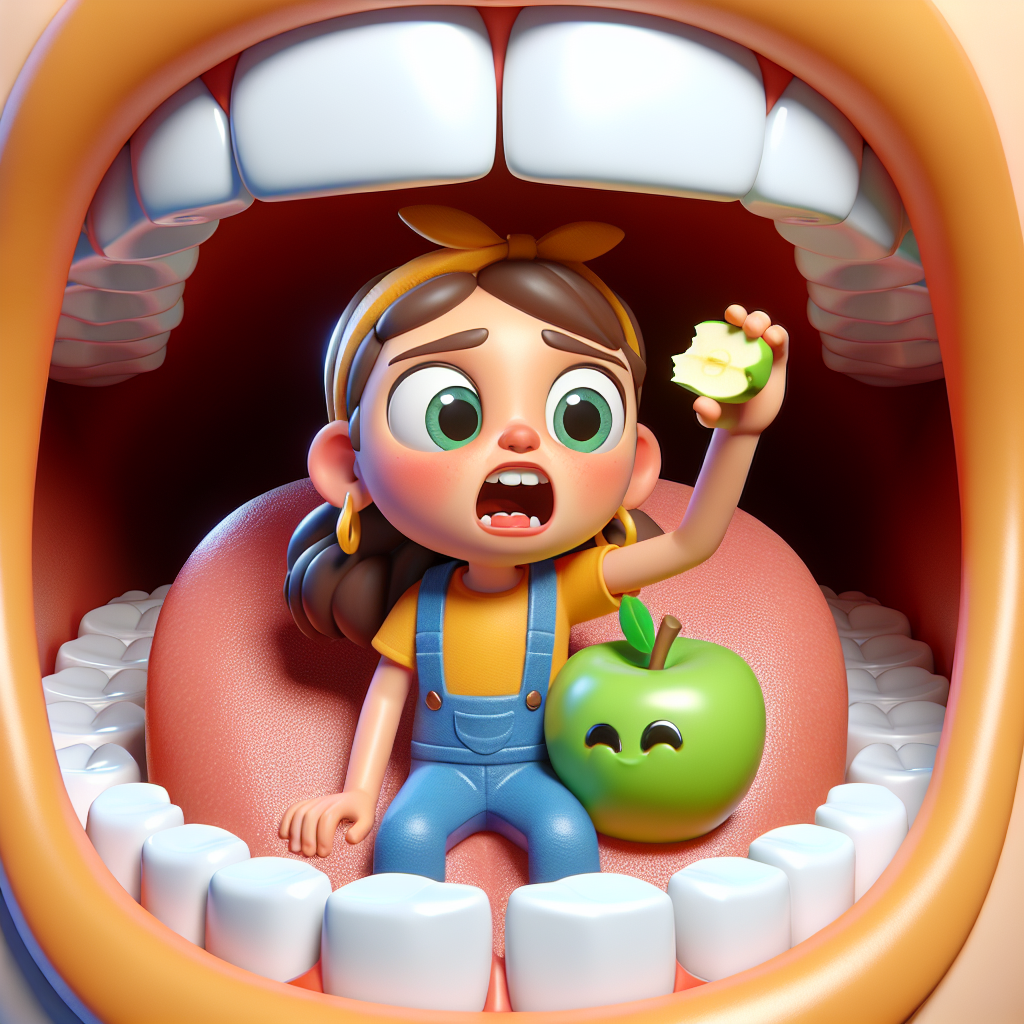
Category: Science Learning + Family Learning
Best for: Ages 4–10 (Adult-guided)
Use case: Classroom, homeschool, bedtime learning, ESL/EAL support
Why Teach Digestion Through Stories?
Many children struggle to understand biology because the processes are invisible. The digestive system is especially challenging: it involves multiple organs, sequential steps, and abstract concepts like absorption and nutrients.
Storytelling makes digestion easier to teach because it:
- turns organs into “characters” children can remember
- creates a clear sequence (mouth → stomach → intestines)
- reduces fear or discomfort around body topics
- increases motivation and engagement
- supports language development and science vocabulary
When adults use a story like Emily & Crunchy, they are not replacing science—they’re building a bridge toward it.
Want to teach it through a fun story? 💜Watch the full Story + Activity Pack on our YouTube channel!
Scientific Accuracy
The story reflects the key stages of digestion in a developmentally appropriate way. Here is the science behind each part, with simple language you can use during teaching:
1) Mouth: Mechanical Digestion Begins
In the mouth, chewing breaks food into smaller pieces. This increases surface area and helps digestion happen more efficiently. Saliva supports swallowing and begins early digestion.
Teaching tip:
Ask children why chewing matters: “What happens if food stays too big?”
2) Esophagus: Transport to the Stomach
Food travels through the esophagus via rhythmic muscle movements (peristalsis). This is not “falling”—it is an active process.
Teaching tip:
Use a “squeeze a tube” demonstration with a soft cloth or paper towel roll.
3) Stomach: Mixing + Chemical Breakdown
The stomach mixes food with digestive juices. This breaks food down further and prepares it for the next stage. The story’s “bubbly pot” metaphor is a helpful visual for young learners.
Teaching tip:
Use language like: “The stomach is a mixer, not a storage box.”
4) Small Intestine: Nutrient Absorption
Most nutrients are absorbed in the small intestine. This is where the body takes what it needs from food and sends it into the bloodstream for energy, growth, and repair.
Teaching tip:
Use the phrase: “Small intestine = nutrient catcher.”
5) Large Intestine: Water Absorption + Waste Preparation
The large intestine absorbs water and prepares waste to leave the body. This step helps maintain hydration and balance.Teaching tip:
Emphasize this is normal and healthy—avoid shame-based language.
How to Use the Story in a Lesson (Step-by-Step)
Step 1: Read the story once for enjoyment
Let the child simply enjoy the characters and flow.
Step 2: Read again with “science pauses”
Pause after each organ and ask:
- “What job did this organ do?”
- “What happened to Crunchy here?”
Step 3: Introduce key vocabulary
Use a short list (5–7 words max):
- digestion
- mouth
- stomach
- small intestine
- large intestine
- nutrients
- energy
Step 4: Connect to real-life habits
Without pressure or food battles:
- “Fruits and veggies help our body helpers work well.”
- “Water helps digestion too.”
Reflection Questions (For Guided Discussion)
Use these questions for classroom discussion or family talk:
- What did the mouth do first, and why was it important?
- What was the stomach’s job in the story?
- Where does the body take nutrients from food?
What happens to the parts the body doesn’t need?
Activity: “Body Helper Chart”
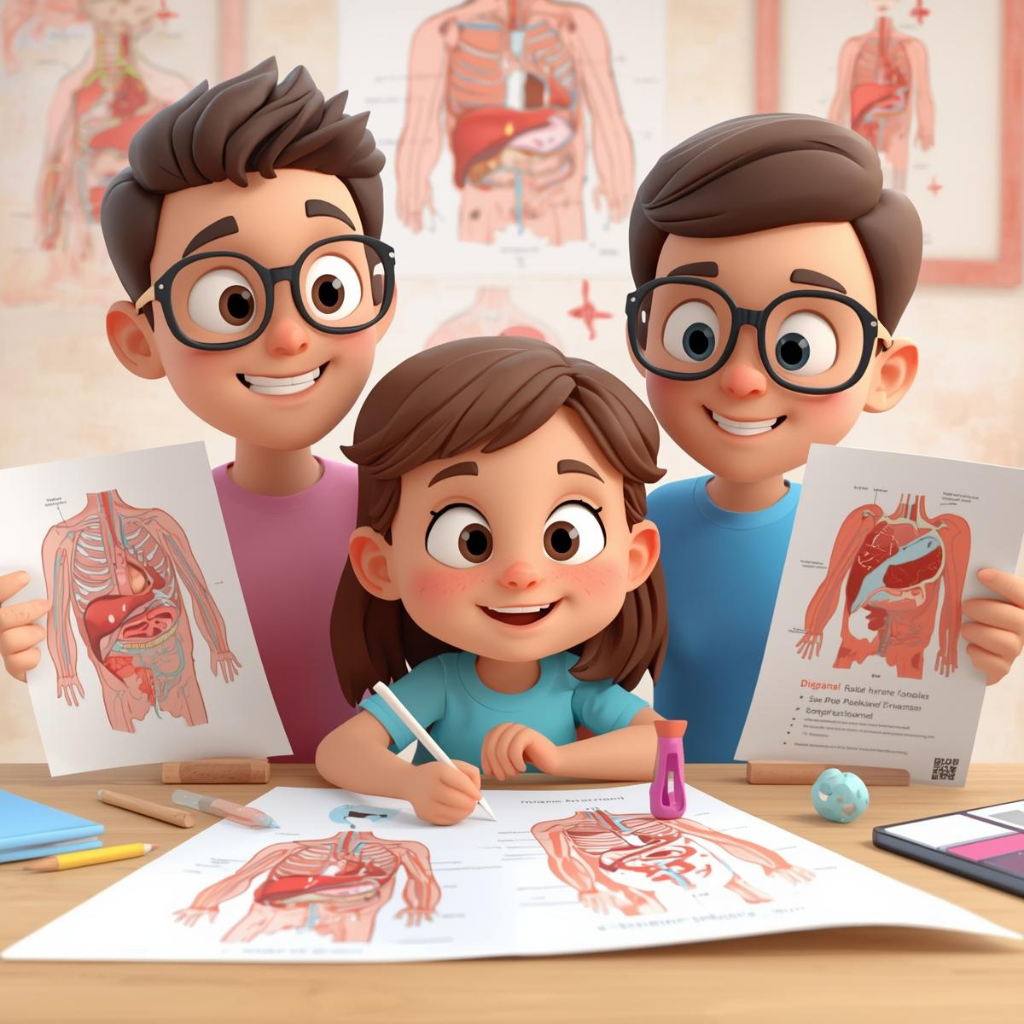
Goal: strengthen memory and sequencing
Instructions:
- Draw 4 boxes: Mouth, Stomach, Small Intestine, Large Intestine
- In each box write:
- “Job” (one sentence)
- “What Crunchy experienced” (one sentence)
- “Job” (one sentence)
- Optional: add arrows to show the journey
Extension idea (for classrooms):
Have students work in pairs—one explains, the other draws.
🎬 Watch the full Story + Activity Pack on our YouTube channel and use it for learning at home or in class.
Why This Supports Learning Outcomes
This story-based approach supports:
- science comprehension through sequencing
- early anatomy knowledge
- language development (especially ESL/EAL learners)
- family engagement and conversation
- positive health messaging without fear
Final Note for Adults
The goal is not memorizing complex biology. The goal is helping children build a clear, confident understanding of how their bodies work—through a safe, meaningful learning experience.
Ready to try it with kids?
▶️ Watch the complete Story + Activity Pack on our YouTube channel.